
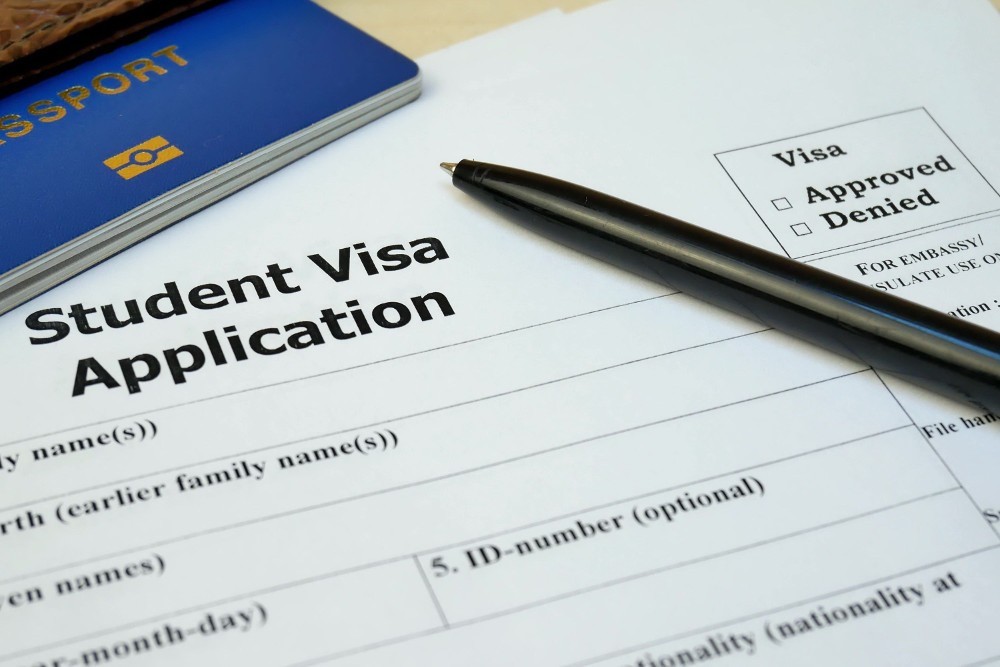
How to apply for a German school visa
Information about visa requirements for studying in different European countries.
How to apply for a German school visa
You apply for a school visa at the responsible German mission abroad and need to provide school documents and proof of funding.
For a school visa (for attending school or taking part in a school exchange in Germany), the basic steps are usually the same, even if details differ slightly from country to country.
1. Check if you actually need a visa
Not all nationalities need a visa before coming to Germany for school attendance. Some countries (for example Brazil, Australia, the USA, Japan, etc.) allow visa‑free entry; in these cases, you apply for a residence permit only after you arrive in Germany. Which rules apply to your nationality is listed on the website of the Federal Foreign Office under “Visa and Entry”.
2. Requirements for a school visa
Typical basic requirements are:
Confirmation of admission or participation: confirmation from a German school or official exchange programme (school exchange or regular school attendance, usually from around grade 9).
Proof of sufficient financial means: evidence that accommodation, food and pocket money are covered – for example via a blocked account, a formal declaration of commitment, a scholarship or a written statement from host parents that they will cover all costs.
Health insurance: proof of valid health insurance for your entire stay.
For minors: notarised consent from parents or legal guardians; for younger pupils, often also the name of a responsible adult in Germany.
3. Where and how to submit your application
You always apply for the school visa at the German embassy or consulate in your country of origin or residence.
The usual process:
Go to the website of the German embassy/consulates in your country and look for “Visa for school attendance / pupil exchange”.
Book an appointment for the visa application.
Fill in the application form (national visa, category school attendance / pupil exchange).
Prepare all documents in original plus copies (see below).
Go to the appointment in person, submit your documents, give fingerprints and pay the fee.
Processing can take several weeks to months. Embassies usually recommend applying early – often at least 6–8 weeks before your planned date of entry.
4. Typical documents for a school visa
Lists differ slightly depending on the embassy, but you almost always need:
Valid passport
Completed and signed visa application form plus biometric passport photo
Proof of school placement in Germany: admission or invitation letter from the German school or exchange organisation (including duration, type of schooling, any fees).
Proof of sufficient financial means: e.g. blocked account, scholarship, declaration of commitment, proof of parents’ income, or a written declaration from host parents.
Proof of health insurance for Germany.
For minors: notarised consent from parents/guardians, and, if only one parent signs, a suitable power of attorney.
Some German missions also require a motivation letter or CV.
5. After arrival in Germany
If you enter Germany with a national visa, it is usually only valid for entry and a limited initial period (for example 90 days). After arrival:
Register your address at the local registration office (Bürgeramt/Einwohnermeldeamt).
Within the visa validity (usually within 90 days), go to the local immigration office (Ausländerbehörde).
Apply for a residence permit for school attendance or school exchange (you will generally need similar documents to those used in your visa application).
The residence permit is normally granted for the duration of your exchange year or school stay.